Stanford Neuro at SfN 2015
/
Your guide to finding all the posters and talks by Stanford Neuro students at SfN this year. Plus a few ways to follow along from home.
Read MoreHome of the Stanford Neuroblog. Scientists writing about science, for a general audience.
Have a question about the brain? Ask a neuroscientist a question.
Your guide to finding all the posters and talks by Stanford Neuro students at SfN this year. Plus a few ways to follow along from home.
Read MoreHave you ever seen a puppy or infant twitching at night and wondered if he/she was having a nightmare? As worrisome as they may be, these sleep twitches, termed “myoclonic twitches”, are not exclusive to our bad dreams. In fact, many species exhibit these twitches, and an increasing amount of evidence suggests that they may play a more important role during development than occasionally disturbing our sleep.
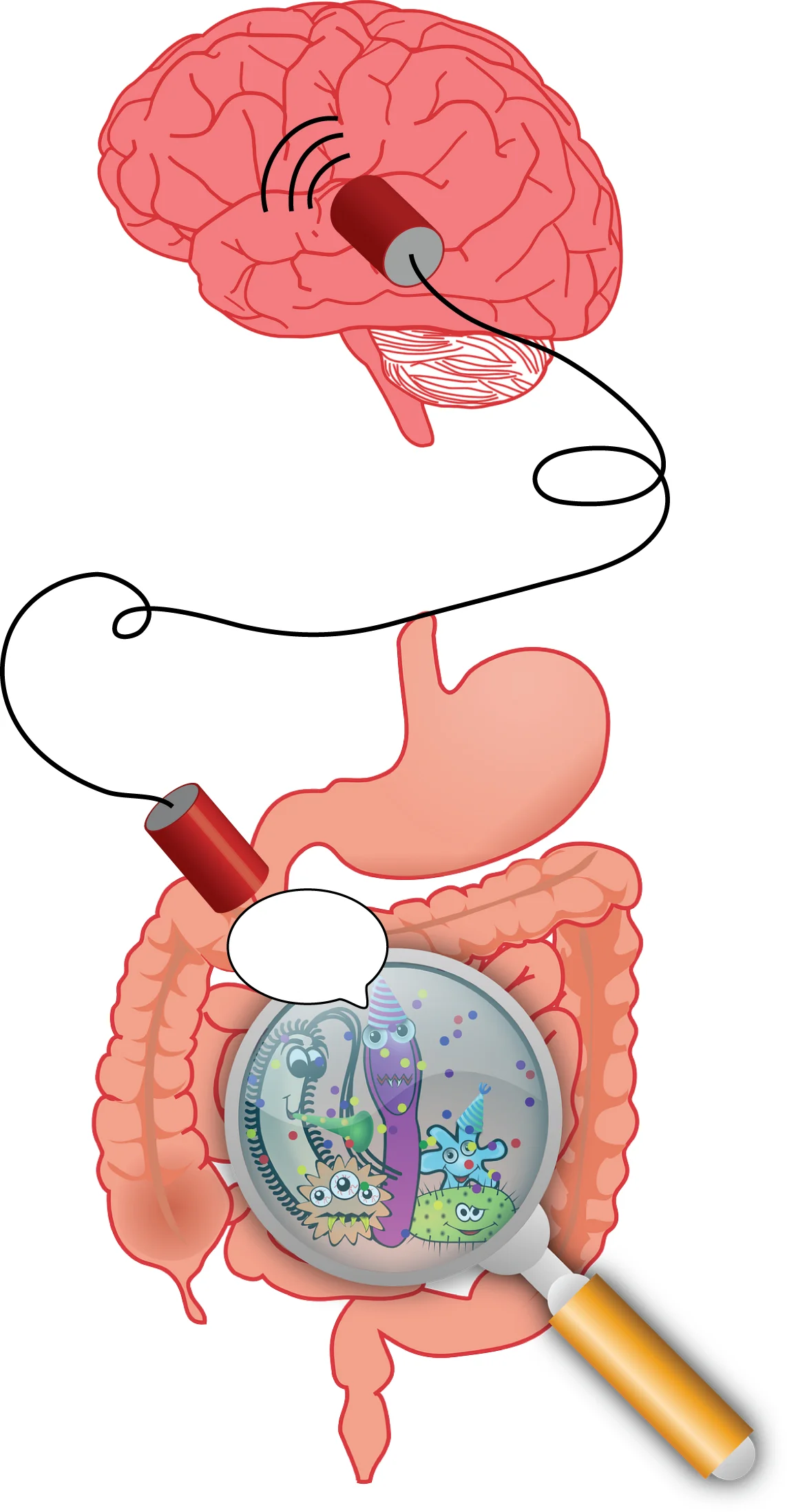
Read MoreAncient humans often referred to the “bowels” as the seat of emotional experience. We now attribute higher functions such as thought and emotion exclusively to our brains, but the idea that what’s going on in your gut may control your instincts may actually have some biological credibility.
Read MoreWhile on the subject of decision making...
Today, our guest is Anne Churchland, Associate Professor at Cold Spring Harbor Laboratory. We’ll be speaking with her about finding science by teaching kids math, the neural basis of multisensory decision making, and the benefits of lab blogging.
We make decisions from the moment we get up (what to eat for breakfast? what should I wear today?) until the moment we go to sleep (do I actually need to brush my teeth?). Decisions are important – some of them guide the course of our entire lives. How does our brain carry out this complex and highly important process?
Read MoreExcited to present the first episode of the season!! In this episode, our guest is Jie Shen, a Professor of Neurology at Harvard Medical School. We speak with her about her education in China, figuring out your true love for science (even if you're not yet sure!), and the role of presenilins in Alzheimer’s disease.
Stick with us next week for an interview on decision making with Anne Churchland, Asst. Professor at CSHL.
What classes should undergraduates interested in a career in science take?
We asked a bunch of Stanford neuroscientists, and their answers will probably surprise current/aspiring Biology majors. (Hint: Statistics. Definitely statistics.)
Read More
Our friends at UCSF's Carry the One Radio have put together an awesome podcast, with a fresh new format. The podcast team explores a single theme in Neuroscience, in this case, the brain and communication, and interviews three neuroscientists with diverse approaches to exploring this essential topic. Check it out here:
How does the brain produce thought? Where is memory encoded in the brain? How do we reconstruct images in our brain?
These are some brain questions that fascinate my neighbor Rob, who has studied engineering and now works in photonics. He has no background in neuroscience, but wants to learn about it. Sure, he has the Internet, but it's really a jungle out there. I think a compact book is always a better map to begin exploring uncharted territory, so I suggested him to check out the 30-Second Brain. Although brief on content, it is a book with a wide and riveting helicopter view of neuroscience.
Read MoreHome of NeuWrite West and the Stanford Neuroblog.
Do you have burning questions about how the brain works? You’ve come to the right place! Submit all your questions to NeuWrite West and we will have a neuroscientist research and answer your question.
Note: The NeuWrite West team consists of research scientists. Therefore, we can not provide answers to questions of a medical nature; we are not medical doctors.
Questions will have a turn-around time of approximately one month.

Or search for "NeuWriteWest" (without spaces) on your favorite podcast app!
Powered by Squarespace